ATF SG Study Group Session 1 - 2026: Kick-off Session
02 April 2026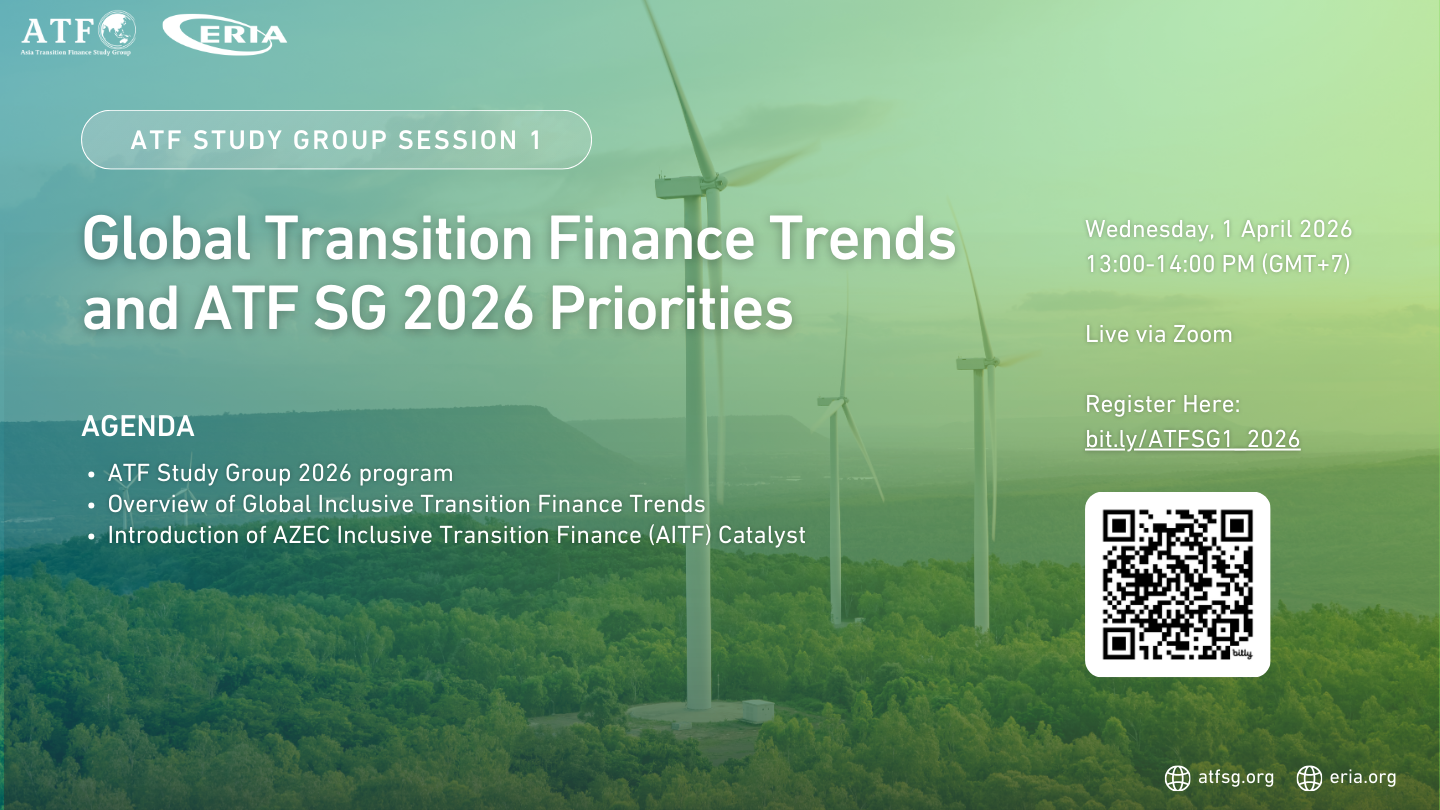
The Asia Transition Finance Study Group (ATF SG) held the kick-off study group session of 2026 on 1 April (Wed).
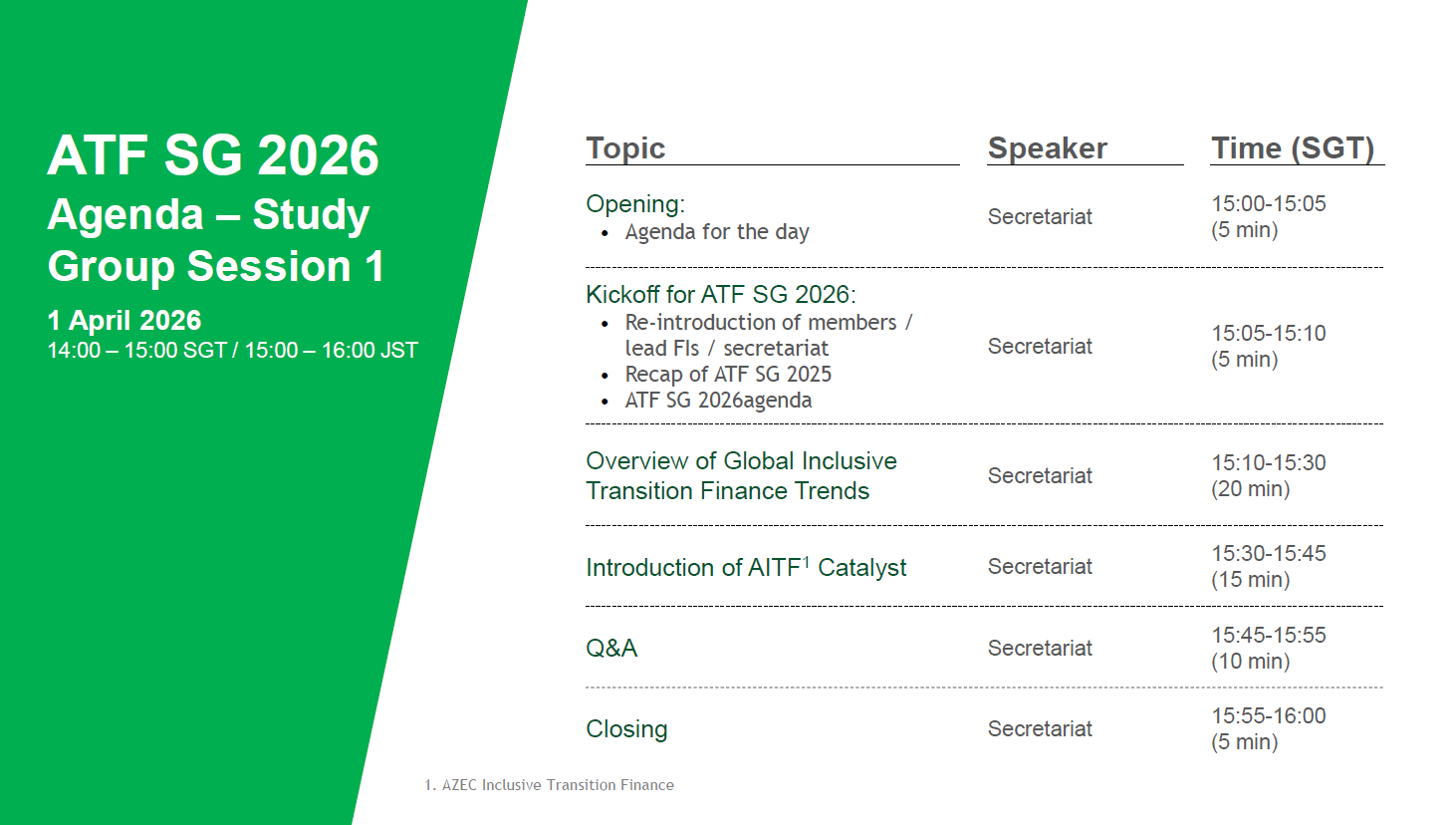
The session marked the kickoff of ATF SG 2026, with a focus on transitioning from knowledge-sharing toward implementation of inclusive transition finance. The Secretariat outlined the objectives for the year, emphasizing the importance of integrating insights from past discussions, identifying key bottlenecks, and supporting the development of concrete, bankable projects. The study group will continue to serve as a platform for collaboration and will produce its annual report, with upcoming sessions expected to cover themes such as just transition, hard-to-abate sectors, and policy and public-private collaboration.
The session also revisited the rationale for transition finance, particularly in the context of Southeast Asia, where strong economic growth and rising energy demand are driving emissions. While renewable energy ambitions are increasing across the region, significant investment — such as in grid infrastructure — is required to enable the transition. Against this backdrop, transition finance was positioned as a critical tool to bridge the gap, though participants noted the increasing complexity of frameworks, taxonomies, and guidelines, as well as ongoing challenges in their practical application.
A key theme of the discussion was the evolving concept of inclusive transition finance, which spans multiple dimensions, including socio-economic, geographical, and analytical perspectives. The landscape is becoming more diverse, with the coexistence of rule-based, principle-based, and pathway-based approaches. While this evolution allows for greater flexibility, it also creates challenges in navigating and operationalizing these frameworks effectively.
Across discussions, participants highlighted that the most pressing challenge remains the lack of a strong pipeline of bankable projects. In response, the session introduced the AITF Catalyst initiative as a mechanism to support project development from early-stage identification to implementation. By addressing issues related to feasibility, eligibility, and bankability, and by leveraging partnerships with public institutions and policymakers, the initiative aims to accelerate the creation of credible transition finance cases in Asia.
The session concluded with an outline of next steps for 2026, including a series of regular sessions and continued engagement from participants. Members were encouraged to share feedback and contribute to shaping the study group’s direction as it moves toward a more action-oriented phase.